“But How Did It Feel?”

I live and work in New York (Long Island specifically) and things have pretty much settled down at our hospitals.

The make-shift ICUs have been dismantled, COVID patients on vents relegated to a small area in the back of the MICU (Medical ICU). The non-intubated people housed in three hallways of the unit that had always been designated for infectious diseases. Those areas still have the COVID look to them, bags taped to walls and blue plastic gowns hung from hooks, but there is less desperation than there was.

The patients that were going to die in the ICUs are slowly dying, regardless of what the families want and what any doctor could ever do. Those not on vents are going home (with oxygen and forever damaged lungs -pulmonary cripples) or still short of breath on high concentration of oxygen and clearly going nowhere.

At least the families can come to the windows and see their relatives from outside the buildings. And we’re beginning to let some families come visit those near death.

Everywhere else in the hospital it’s different. We still all wear masks (a habit that will probably live on for a good long time) but the rooms are now immaculate, the floors shiny and the walls all freshly painted. All hint of the horror covered in bright white with earth-tone trim.

I was rounding with my team this week when our social worker (a brilliant woman who was “parachuted” into the hospital from our hospice affiliate on a grant to help us – she arrived as the “tide” was washing out) noted the look in our eyes and the blank eyes of the nurses on the floors and asked us, “but how did it feel?”

It Was Dark
The lights weren’t bright enough

As a group, including some floor and ICU staff, we all had similar recollections.

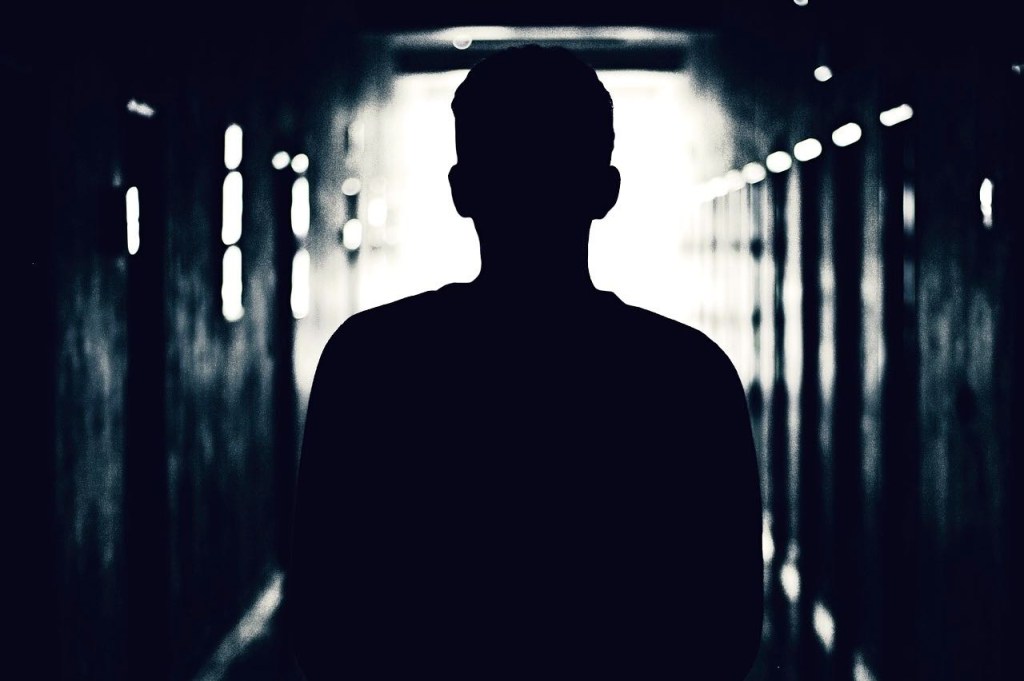
It was dark. Not literally, but no matter how many lights were on – the hallways, rooms, and offices felt darker than they should have been. The atmosphere inside was “heavy”, hard to breath.

We all agreed that we actually couldn’t remember what it was like… more like we didn’t want to remember it, but we all had individual “moments” we remembered. One nurse said that she couldn’t remember anything about those weeks, but vividly described an incident in which two young patients coded in the same room and they had to choose which one to intubate first and which one to let die.

A social worker recalls helping a group of nurses communicate with a patient who spoke Greek and was isolated and scared, they didn’t have to care so much, she said, but it was the act of caring so hard that maintained their sanity.

I recall the surreal nature of one of our make-shift ICUs towards the end of the first wave, messy, music from phones in the background, “bunny suits” tied around everyone’s waist (they are hot to wear all day).

When these snippets of shared memories are recalled, everyone looks the same, they get glassy eyed, as if peering into a dark distant place, then everyone says the same things.

“I can’t remember much about it.”

“It’s too soon-I don’t want to think about it.”

“I had no one to talk about this with anyway. “

“It pisses me off that everyone outside is bitching and moaning about being BORED!”

“I’m scared, I don’t think I could do it again. But I’m scared that we’re gonna have to, no one is paying attention!”

I don’t know how I’ll be able to do it again, but I will… as will everyone else, no matter how scared they are. It’s what we do.

Covid Update

So, I don’t care what you think of New York or it’s governor, New York and the Northeast (except Vermont) has done an amazing job in decreasing cases of Covid.

I fear for all those states that thought we were joking or that we were over dramatic “snowflakes” ( I invite you to see the refrigerated trucks behind the hospital). You are now being hit with it worse than we were.

Wear all the PPE.

I address the new Covid Warriors (healthcare workers) :

Patients should get high flow O2 and lay them prone. All of the meds we have now DON’T WORK!

Isolation is important as is hand hygiene.

Eat well, sleep, wear your mask it’s not political, it’s reality, exercise. Keep relative isolation from vulnerable family members.

Scrubs, head covers with buttons on the sides for the mask straps (look on Etsy) and “Covid sneakers” that you change out of outside your house and throw in the wash before walking in.

Be good to yourself, it’s gonna suck and you’ll likely end up as damaged as we are in the NE. We’ll be here when you need help like you helped us.

New Mask

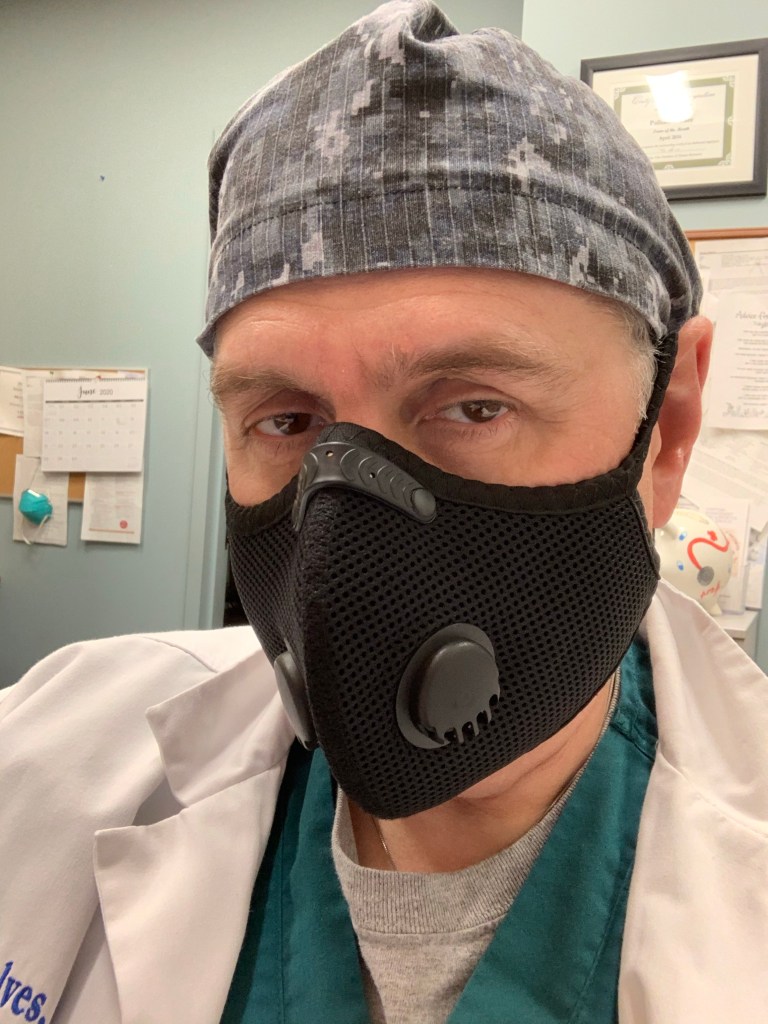
On a not serious note, I got a new mask.
Base Camp Mask

Since we’re all going to need masks for the foreseeable future, I ordered a very cool looking and comfortable mask. It is super comfortable with a Velcro strap around the back of the neck (takes the strain off the ears) very breathable with replaceable filters inside.

Called Base Camp masks, it’s good quality, solid shipping and less than 40 dollars.

You’ll spend more on boxes of cheap masks of poor quality that don’t look near as cool. Btw, I’m not getting paid to show you the mask, I just think it’s cool.

As always, wash ya hands, wear a mask, social distance, and love each other… we are all we have.
Observations On A Friday Evening.

1. A brand new 3M N-95 mask smells a little like vanilla ice cream.

2. All nurses are amazing.

3. You can’t shock an ER nurse.

4. ICU nurses will save your life.

5. Nurses who have ever cared for COVID patients are certified Badass, will chew steel for lunch and spit out nails.

6. I would go into battle with any nurse at my side.

6a. Nurses Aides are the infantry in healthcare, they do the grunt work and come up with most brilliant observations in the fight. The view that is often overlooked by the higher ups.

7. There is a whole population of younger people (35-60 yo) who’ve contracted COVID who are alive, on high flow and high percentage oxygen, can’t move more than side to side, and are trapped as chronic pulmonary disease patients likely forever.

8. There is a whole new population of younger people (35-60 yo) who’ve contracted COVID who are now on hemodialysis as well as chronic pulmonary disease patients.

9. The medical system will have to re-create the “sanatorium” system for these patients for many years to come to aggregate these patients under the care of expert Doctors and Nurses if they are to have any hope of return to society.

10. Most of what we give now (in terms of medications) and the way we give it now is minimally effective.

11. The best treatments are oxygen, prone positioning, nutrition, great nursing care, and love.

12. It is genuinely frightening to walk into a building every day knowing that you could get a deadly disease, pass it to everyone you know, and become just another statistic, a mere number in a ledger.

13. It is frightening to realize that this is going to be the way it is for a VERY long time (even when there is a vaccine).

14. Much the same way that “every Marine is a rifleman first”. Every physician should be capable of intelligently and effectively managing a patient from top to bottom, specialty comes later. This should be reviewed on a certain timetable, not by testing, but by doing.

As always, wash your hands, don’t touch your face, wear masks in public, do the social distance thing, and practice love and kindness. There is too much hatred in the world.

Testing, Testing, Testing…

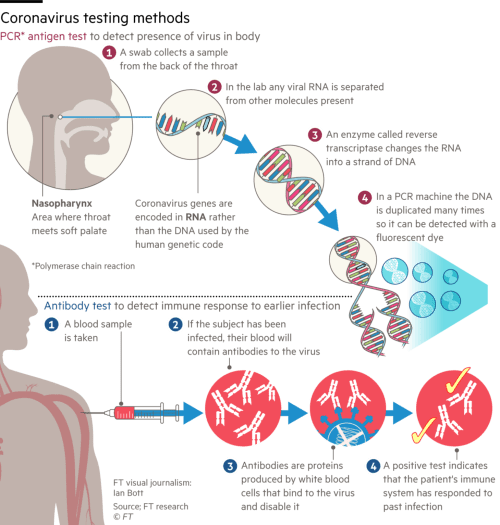
I was tested three days ago for the antibodies for Covid-19.

I came up negative.

This is a good thing I tell myself, as I try to process and come to terms with, “That horrible cough and fatigue I had over two months ago” must have been just a bad cold. What it means from a scientific point of view is that I haven’t had an exposure that resulted in my getting an infection that would have prompted my immune system to mount an antibody response within the last two weeks.

So my daily exposure to Covid-19 at the hospital (as limited as it is compared to all the real front line nurses, doctors, and especially nurse’s aides) has not given me an infection.

So yay for PPE!

Yay also for having an office to which I can escape to after rounds, even though it smells like Clorox and has PPE bags hanging from the walls, it is an area to escape from the crushing presence of the virus. I feel for those in the ED and Covid units who have little escape.

Corona virus testing methods

As expected, one of my colleagues in the office has also tested negative and I expect the other two to test negative as well.

This does NOT mean that we can’t get it though, so the idea of have a “card or an app” that identifies a person who is negative as “safe” is silly.

It just means that I haven’t gotten an infection in the last 2 weeks. It doesn’t mean that I don’t currently have a sub-clinical (no symptoms) infection and I might be positive in two weeks, or even that I am not currently infectious. So there’s that.

And there’s the quandary.

Obviously, those of us who are negative are now in the “try not to get it” game. I can assure you that you don’t want to take the chance on getting it and being that lucky small percent that get asymptomatic infection.

If, on the other hand, you are positive and have antibodies, you have the option of getting a good quantitative (to see the levels of antibodies) test, and donating plasma to see if it helps, or not.

However, does having antibodies give you any immunity? Can you get it again? How long would this immunity (if it is a thing) last? Would it be partial (like making a bad infection less difficult) or total?

We don’t know.

Some viruses give a strong immunity and some don’t. I personally have had Rubella (German Measles), four times in my life until I started getting MMR vaccine (yeah there was a time that was not a thing – I’m old ok?) because the Rubella disease didn’t give me long lasting immunity.

Granted, if this virus gave no immunity (of any sort) it would be one of very few that didn’t, but the issue is, we just don’t know.

Testing everyone…

Testing Everyone

So, since we didn’t get ahead of this thing at the start (for whatever reason… lets not get into it), we have to play the cards we’re dealt .

The only way to know who is “safe” and who is “contagious” and more importantly, what is the prevalence of the virus is to test everyone repeatedly.

Without this, we won’t know what the true infection rate is, we won’t know what the true death rate is, we won’t know how the disease spreads, and we’ll stumble around just watching some people live and some people die like we did in the 1960’s (I was there, it sucked – routine male sterility with mumps, routine death and blindness from measles, paralysis from polio, etc). So yeah we test everyone, maybe on an every 6 month basis, but this should not in any way be used to restrict anyone from their rights, just as a tool to understand the disease and control its spread.

The early numbers we have (which stink because we haven’t tested enough) don’t show that 50% of the population that gets Covid gets antibodies but like I said, these numbers can change when we actually start testing people en masse.

Until a vaccine is done, everyone wears a mask and presumes the other person is infectious.

Kind of a rough way to live, not to mention a rough way to thrive, but unless you are willing to absorb three to five million deaths in the US alone (like they would have been ok with in the 50’s and 60’s because we didn’t have anything else) it is what we are going to have to do.

By the way, if your answer is that you’d be ok with it, you’ll be doing it at home by yourself, because we have seen that the medical system, such as it is, can barely keep up with the current level of dying patients.

Next Time: Anticoagulation For Asymptomatic Cases?