
How Do We Breathe?
Ok so we know how Covid -19 works and that it attacks the lungs (and kidneys). Why do some people end up on Ventilators and why do some end up not needing them?
Short answer: We don’t know.
That is what makes this thing so difficult to predict and scary. It isn’t “I’m young and healthy, I’ll be ok!” it seems to be either some kind of genetic thing or viral load or something that causes some people – regardless of age or health to have respiratory failure and some people to be OK. I’ve seen personally 96 year olds with all kinds of co-Morbidities (other things going on other than Covid), get better and go home and a 37-year-old otherwise healthy man die of respiratory failure. So yeah, we don’t know.
But before we talk about what ventilators are and why we use them, we need to get on the same page.
Definitions
Respirator: A form of PPE (personal protective equipment) that has filters and generally (but not always) a motor and a source of additional air – like a scuba tank . Think of the air tanks and masks worn by firefighters, those are respirators. There are smaller versions that are worn by surgeons in hospitals when in a toxic situation – usually in the movies.
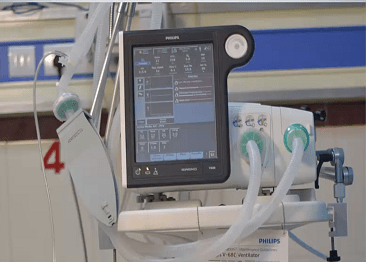
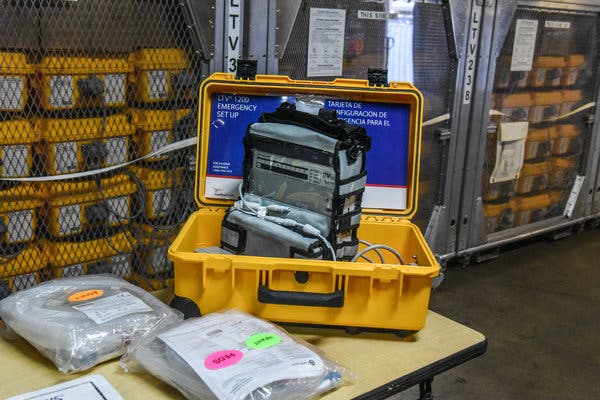
Ventilator: A machine that blows air (of differing oxygen percentages and pressures) into the lungs and takes the air out. We call these things ventilators because what they do is push air in and take air out (Ventilate the lungs) – they DON’T inject air or oxygen into the lungs.
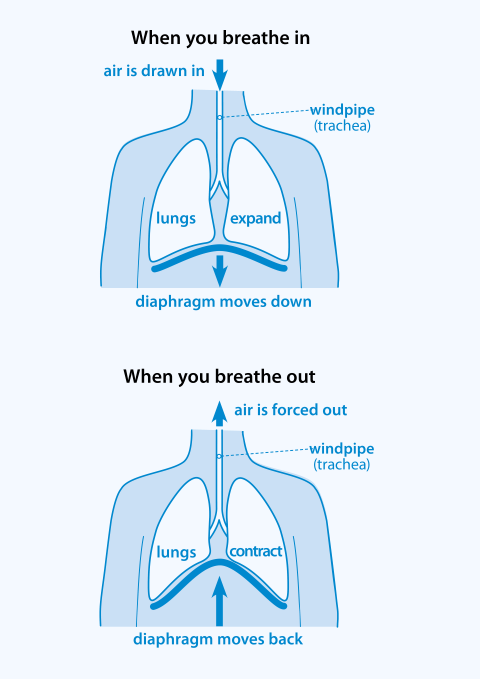
Natural Breathing
When we breathe naturally our diaphragms (the wide muscle between your chest and your abdomen) contract (move down) and since the only way into your lungs is through your throat (trachea), the air whooshes in. When we breathe out, the diaphragms relax and the air comes out.
That’s the natural way.
When we use ventilators, we DON’T do it the natural way. Instead of letting the diaphragms and the body take in air like the tides (in and out), we stick a long plastic tube into the throat, between the vocal cords, inflate a little balloon at the end of the tube to seal it up and blow a certain amount of air with a certain amount of oxygen in to it and then take it out.
Intubation
When someone is intubated (like during surgery or for a serious illness like Covid), it happens like in the diagram below.
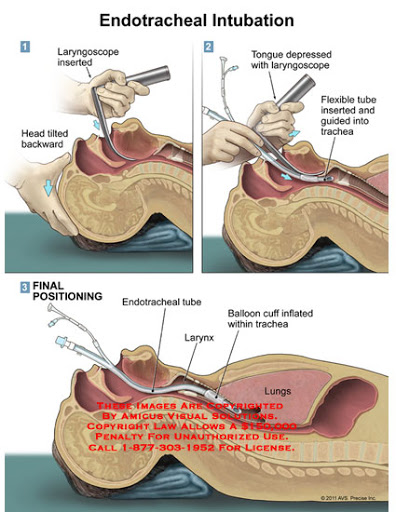
A doctor puts a thing called a laryngoscope which is basically a large long spoon, that is used to move the tongue out of the way and while staring intently (and getting all kinds of droplets all over their face) slides the tube into the trachea.
The balloon is inflated to prevent movement and to seal it off from outside stuff and then it is taped in place on the face. You cannot talk or eat when you are intubated.
In the OR ( Operating Room) this is done in very controlled circumstances, quiet with music in the background – everyone smiling.
In Covid, there is usually anxiety, fear, and a good bit of yelling. These Docs and Respiratory Therapists are pro’s though and they get it done successfully. Once you are intubated, you are put on a mechanical ventilator.
Ventilators
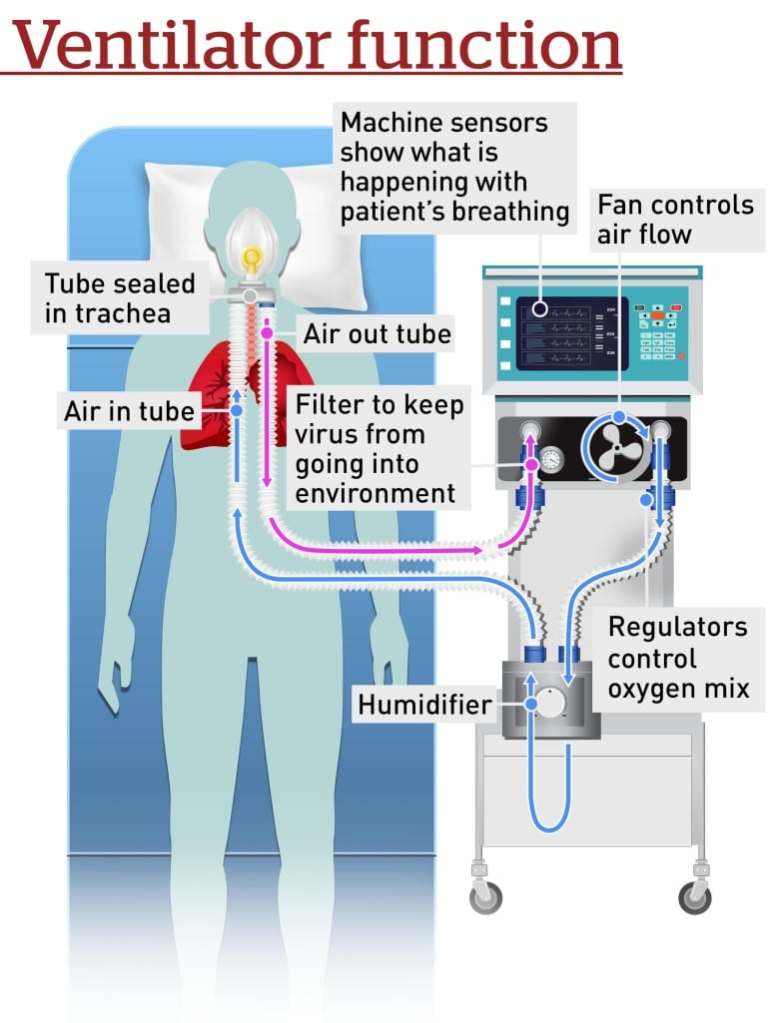
Ventilators consist of several parts. There is the tube that comes out of the patient that is split (soon after it comes out of the person) into the tube that brings the air into the person and the tube that takes air away.
They have built in filters to keep bad stuff (including viruses) from spewing into the air.
There is a fan that is connected to a bunch of electronics that attaches to oxygen tanks. The electronics monitor how much is going in, the temperature of the air, and a whole bunch of other complicated stuff. The fan pushes air through a humidifier (dry air is bad) and then into the patient (like a pump pushes air into your tires at the gas station).
So air (mixed with oxygen and humidification) goes in, and then it lets the air out. Room air has 21% Oxygen (the rest is carbon dioxide, nitrogen, and other gasses). If the body doesn’t have enough oxygen in the blood (there are ways to measure that), then the Docs turn up the oxygen in the air that goes into the lungs, they can go all the way to 100%. When you get better, then the Docs take the tube out.
So Why?
In the last post we talked about how Covid attacks the lungs (and kidneys). When the air sacs get damaged, the body can’t take in enough oxygen from the 21% floating around in the air. It also can’t get rid of the Carbon Dioxide (CO2) that our bodies produce (we make a lot of that). So, in order to do both, the person starts to breath real hard. They also need to move the blood around faster so the heart begins to beat faster.
The problem is that in Covid, the person is coughing a lot.
If they can’t breath enough through the coughing to keep their oxygen in their blood at normal levels (between 88% and 100%), Docs will start them on Oxygen, usually through a face mask.
If the oxygen in their blood is still too low, the person begins to tire out and they will need help to breath. So before this happens they get intubated and put on ventilators.
This isn’t a great sign.
But, there is hope. As we learn more about this bastard, we figure out what works and what doesn’t. We are gentler and have learned that we can tolerate lower oxygen levels.
I’ve seen many people come off ventilators (we call them “vents” – so you’ll sound cool to your friends), and the more good real treatments we get, the more people will be coming off.
Bottom Line
Wash your hands like a maniac… please.
Wear a face mask when you go out anywhere that you might run into people where you have to get closer than six feet.
Don’t touch your face.
When the shortages go away, get hand sanitizer and use it all the time.
Do the Social Distancing thing.
Please Be Safe.
 Life, Health, and Policy.